

When we think about calcium, our minds often jump straight to the health of our bones or the strength of our teeth. While that is certainly a vital part of human biology, there is a far more dynamic and fast-paced world of calcium activity happening inside our cells every single second. Calcium ions act as a universal messenger, a sort of biological telegraph system that tells a heart cell when to beat, a neuron when to fire, or a muscle fibre when to contract. Because this signalling is so fundamental to life, scientists have spent decades perfecting the way we measure it. This is where the modern calcium assay comes into play, serving as a window into the internal conversations of the cell.
Understanding these signals is not just a matter of academic curiosity. It is a cornerstone of modern pharmacology and drug development. If a new medicine intended to treat a heart condition accidentally interferes with the way calcium moves within those cells, the results could be catastrophic. Conversely, by precisely measuring how a drug influences calcium flux, researchers can identify potential breakthroughs for everything from chronic pain to neurodegenerative diseases. The ability to monitor these tiny, rapid fluctuations in real-time has transformed the laboratory from a place of static observation to one of high-speed kinetic analysis.

How we actually see what is happening inside a cell
The primary challenge with studying intracellular calcium is that it is invisible to the naked eye and moves incredibly quickly. To overcome this, researchers use specialised indicators that change their light-emitting properties when they bind to calcium ions. This process generally involves loading cells with fluorescent dyes or expressing bioluminescent proteins that act as sensors. When the calcium concentration rises, the sensor glows more brightly or shifts its colour, allowing sophisticated cameras and plate readers to record the event.
There are several different ways to approach a calcium assay depending on the specific goals of the experiment. Some of the most common methods include:
- Fluorescent indicators like Fura-2 or Fluo-4, which are widely used because they provide a very high signal-to-noise ratio and are relatively easy to load into various cell types.
- Bioluminescent proteins such as Aequorin, which offer the advantage of having almost zero background light, making them incredibly sensitive for detecting subtle changes in calcium levels.
- Genetically encoded calcium indicators (GECIs), which allow researchers to target specific parts of the cell, such as the mitochondria or the endoplasmic reticulum, to see how calcium behaves in different compartments.
By using these tools, scientists can create a detailed profile of cellular behaviour. They can see the ‘resting’ state of the cell, the peak of a calcium spike, and how quickly the cell manages to clear the calcium away to return to its original state. Every one of these parameters offers a clue about the health and function of the biological system being studied.
Why drug discovery relies so heavily on these measurements
In the pharmaceutical industry, the stakes are incredibly high. Developing a new drug can take over a decade and cost billions of pounds, so identifying failures early in the process is essential. This is why the calcium assay has become such a staple in the drug discovery pipeline. It allows researchers to screen thousands of compounds in a short amount of time to see which ones have the desired effect on cellular signalling and, perhaps more importantly, which ones might be dangerous.
Cardiovascular safety is a primary concern in this area. The rhythmic contraction of the heart is entirely dependent on a process called calcium-induced calcium release. If a drug candidate disrupts this delicate balance, it can lead to arrhythmias or heart failure. By performing a detailed calcium assay on human-derived heart cells (iPSC-cardiomyocytes), researchers can observe the ‘calcium transient’—the rise and fall of calcium during a heartbeat—and detect even the slightest irregularity long before the drug ever reaches a clinical trial.
Beyond the heart, these assays are vital for studying the central nervous system. Many neurological disorders are linked to ‘excitotoxicity,’ a state where too much calcium enters neurons and causes them to become damaged or die. Developing drugs that can stabilise these calcium levels is a major goal for researchers working on Alzheimer’s, Parkinson’s, and stroke recovery. The assay provides a quantitative way to measure whether a potential treatment is actually protecting the cells as intended.
The move toward high-throughput screening
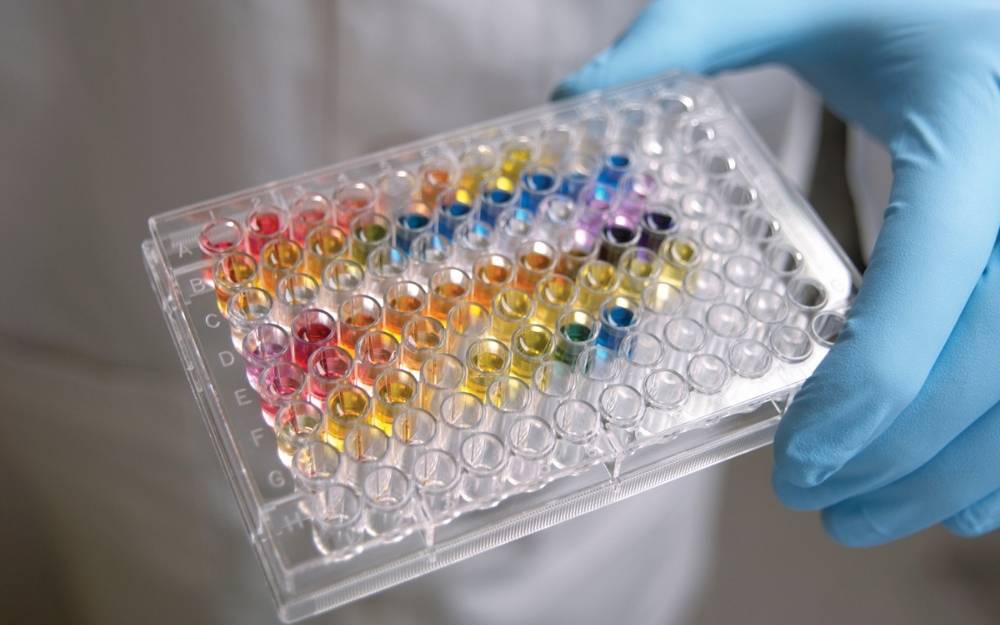
In the past, measuring calcium was a slow, painstaking process that required looking at one cell at a time under a microscope. While that still has its place for detailed mechanical studies, the modern laboratory needs to move much faster. This has led to the rise of high-throughput screening (HTS) platforms. These systems are highly automated, using robotic arms to dispense fluids and motorised plate readers to analyse hundreds or even thousands of samples simultaneously.
The beauty of modern HTS platforms is that they don’t just give a ‘yes or no’ answer. They provide rich, kinetic data. Instead of just knowing if calcium levels went up, researchers can see:
- The speed of the initial calcium rise, which indicates how quickly a receptor is responding to a stimulus.
- The duration of the signal, which can tell us how long a drug remains active at its target site.
- The rate of decay, which shows how efficiently the cell’s internal pumps are working to restore balance.
- The presence of ‘oscillations’ or repeated spikes, which are often used by cells to encode specific types of information.
This level of detail allows for a much more nuanced understanding of how a compound interacts with a biological system. It helps in distinguishing between a drug that gently modulates a pathway and one that completely overwhelms it, which is often the difference between a successful therapy and a toxic side effect.
Overcoming the technical hurdles of assay design
While the concept of a calcium assay is straightforward, executing one perfectly requires a great deal of technical expertise. One of the biggest challenges is the ‘background noise’ that can interfere with the signal. Many chemical compounds used in drug libraries are naturally fluorescent, which can mask the light coming from the calcium indicator. To combat this, scientists use specialised ‘quenching’ dyes that suppress background light or switch to different types of indicators that emit light at wavelengths where the drug compounds are less likely to interfere.
Another critical factor is the health and environment of the cells themselves. Cells are incredibly sensitive to changes in temperature, pH, and the mechanical stress of being handled by robotic systems. If the cells are unhappy, their calcium signalling will be abnormal, leading to misleading results. This is why many labs now use environmental chambers to keep the cells at a steady 37 degrees Celsius and carefully optimised buffers that mimic the natural environment of the human body. The goal is to ensure that the behaviour being measured in the lab is as close as possible to what would happen inside a living person.
Furthermore, the choice of the cell model is becoming increasingly important. While simple cell lines were the standard for years, there is a massive shift toward using human-induced pluripotent stem cells (iPSCs). These cells can be turned into specific types of human tissue, such as neurons or heart cells, providing a much more relevant model for human disease. When you combine these advanced cell models with a high-quality calcium assay, the predictive power of the research increases exponentially, helping to bridge the gap between laboratory experiments and successful patient outcomes.

Rebecca is a technical writer with expertise in drilling operations, offshore engineering, and innovations in petroleum extraction.